Selling AI Voice Agents for Microsoft Teams: What Service Providers Need to Know
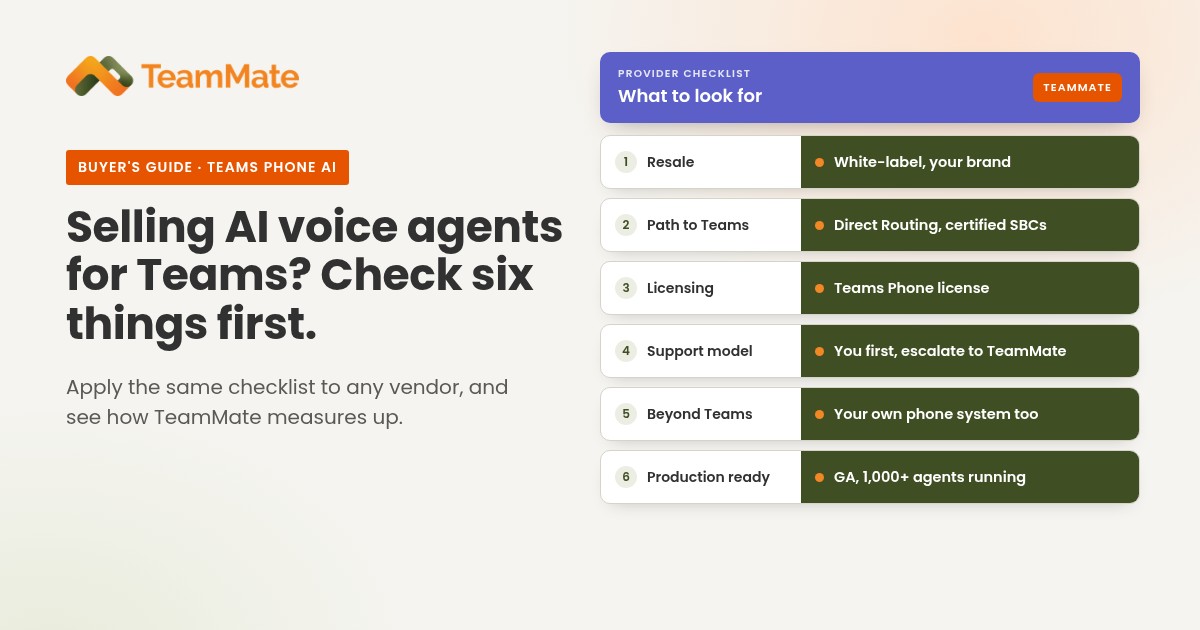
What should a service provider look for when it sells AI voice agents for Microsoft Teams? Six things: whether you can sell it under your own brand, how it reaches Teams, what licenses it needs, who supports the customer, whether it works beyond Teams, and whether it's ready for production. Microsoft makes two reference points easy to find: its own Teams Phone Agent, generally available since September 30, 2026, and its certified Unify voice agent list, which currently names AudioCodes. They aren't the only options. Other vendors offer AI agents for Teams too (Heedify, for example, sells an AI receptionist for Teams), and this guide doesn't try to cover them all.
What it does do is measure TeamMate AI Voice Agents against the options Microsoft puts in front of you, using a checklist you can apply to any vendor.
What should you look for when choosing a Teams voice agent?
Ask every vendor these six questions:
- Resale and white-label. Can you sell it under your own brand and set your own price?
- Path to Teams. How does it reach Teams Phone, and what does Microsoft certify on that path?
- Licensing. Which Microsoft licenses does the customer need, and how is the agent priced?
- Support model. Who does the customer call, and how do escalations work?
- Reach beyond Teams. Can it answer for customers who aren't on Teams, or who use a mix of phone systems?
- Production readiness. Is it generally available and running in production today?
How does TeamMate measure up against Microsoft's options?
| Microsoft Teams Phone Agent | AudioCodes Voca CIC (Microsoft's certified Unify list) | TeamMate AI Voice Agents | |
|---|---|---|---|
| Resale and white-label | Microsoft's docs describe no white-label or resale version; the customer gets it through its own Microsoft licensing | Sold by AudioCodes or through its channel and Authorized Services Partners | White-label: service providers sell it under their own brand, and partners typically add $50 to $250 per account each month |
| Path to Teams | Native Teams voice application on a resource account | Teams Phone extensibility (Unify model), certified by Microsoft for voice agents | Direct Routing through Microsoft-certified SBCs; Microsoft certifies the SBCs, not TeamMate |
| Licensing | At least one Teams Phone license, a free resource account license and Copilot credits | Priced per named or concurrent contact center agent, with add-ons | A Phone System (Teams Phone) license on the Teams side |
| Support model | A Microsoft first-party feature; Microsoft offers Discovery Sessions for planning and setup | "A fully Managed Service," with AudioCodes handling "implementation, operation and ongoing support" | The partner supports its customers and can escalate to TeamMate |
| Reach beyond Teams | Answers calls to numbers assigned to Teams resource accounts | "Customer interactions start, stay, and end in Teams Phone" | Also answers for customers on the provider's own phone system, with a NetSapiens version and PBX Connector for 80+ PBX types |
| Production readiness | Generally available since September 30, 2026; Microsoft's known issues include no support for use in India | Certified for the Unify voice agent model, announced August 17, 2026 | Generally available, with more than 1,000 agents running; 100% Azure in 9 regions, SOC 2 Type 2 |
AudioCodes facts come from its Voca CIC page and announcement. Microsoft facts come from the documentation linked below.
Does Microsoft have a voice agent that's ready out of the box?
Yes. Microsoft's planning overview says Teams Phone Agents "extend auto attendants with AI-driven, human-like conversations that screen calls, answer questions, manage appointments, and route callers without fixed menus." It reached general availability on September 30, 2026, with Bookings appointments, automatic recording and call-length limits in the Teams admin center, and it integrates with Copilot Studio for workflows like billing or order status.
The licensing requirements are at least one Teams Phone license, a free Teams Phone Resource Account license for each resource account, and "Copilot credits and spending policies." Microsoft writes the documentation "for IT pros and Teams administrators," and the agent is created in the customer's own tenant in the Teams admin center.
For a provider, that's the key point. Nothing in Microsoft's Teams Phone Agent documentation describes a white-label, provider-branded or resale version. It's an option your customer can buy without you, so it competes with you for the customer relationship. If your customer chooses it, you supply at most the numbers, through Operator Connect or Direct Routing, or the Teams Phone licenses. The agent revenue and the brand aren't yours.
It also has documented limits: Microsoft's known issues say it "is not supported for use in India," and its Authorized Users feature isn't supported. Separately, Microsoft's newest voice models, MAI-Transcribe-2-Streaming and MAI-Voice-2.1, launched October 1 in public preview, "provided without a service-level agreement."
What does Microsoft's certified voice agent list cover?
Microsoft's Teams Voice Agents integration page describes the Teams Unify Integration Model for voice agents Certification Program, which "verifies that each participating provider's solution provides the quality, compatibility, and reliability they expect from Microsoft solutions." As of October 16, 2026, the list has one entry: AudioCodes Voca Conversational Interaction Center (Voca CIC).
The page sets a support boundary: "Microsoft supports voice agents solutions only from the certified partners. If there are issues, you must contact your voice agents partner first." Microsoft "may reject support cases where a noncertified voice agents solution is used." That boundary applies to one path, described in the Teams Phone extensibility overview, where an Auto Attendant or Call Queue hands the call to an agent through Azure Communication Services.
The list isn't a catalog of every Teams voice agent. Microsoft's planning page covers agents "whether built in-house or delivered by a partner." Still, AudioCodes deserves credit for being first through. Its August 17, 2026 announcement says certification included "a full security and compliance review by Microsoft."
How does TeamMate connect to Teams Phone?
TeamMate AI Voice Agents uses Direct Routing, not the Unify path. Microsoft's Direct Routing planning guide says it lets organizations "connect their own telephony infrastructure to Microsoft Teams Phone" using a Session Border Controller (SBC).
Direct Routing has its own certification, for SBCs. Microsoft certifies SBC vendors and "only supports Phone System with Direct Routing when used with certified devices." TeamMate connects through Microsoft-certified SBCs. That certification covers the SBCs. Microsoft doesn't certify TeamMate or its voice agents, and its voice agent page doesn't address Direct Routing. On the Teams side, a TeamMate voice agent requires a Phone System (Teams Phone) license.
Where does each option fit?
Microsoft Teams Phone Agent suits a customer that already licenses Teams Phone, runs everything in Microsoft 365 and wants a smarter auto attendant it manages itself. It's simple to buy, and it's bought without you.
AudioCodes Voca CIC is a full Teams contact center, not just an agent, and the only vendor on Microsoft's certified voice agent list. AudioCodes calls itself "the one-stop shop serving you, or enabling your trusted Authorized Services Partner." It fits a customer that wants a certified contact center run by one vendor.
TeamMate AI Voice Agents is built for the provider that wants to sell AI as its own product:
- Your brand. It's white-label, so the customer sees and hears your brand.
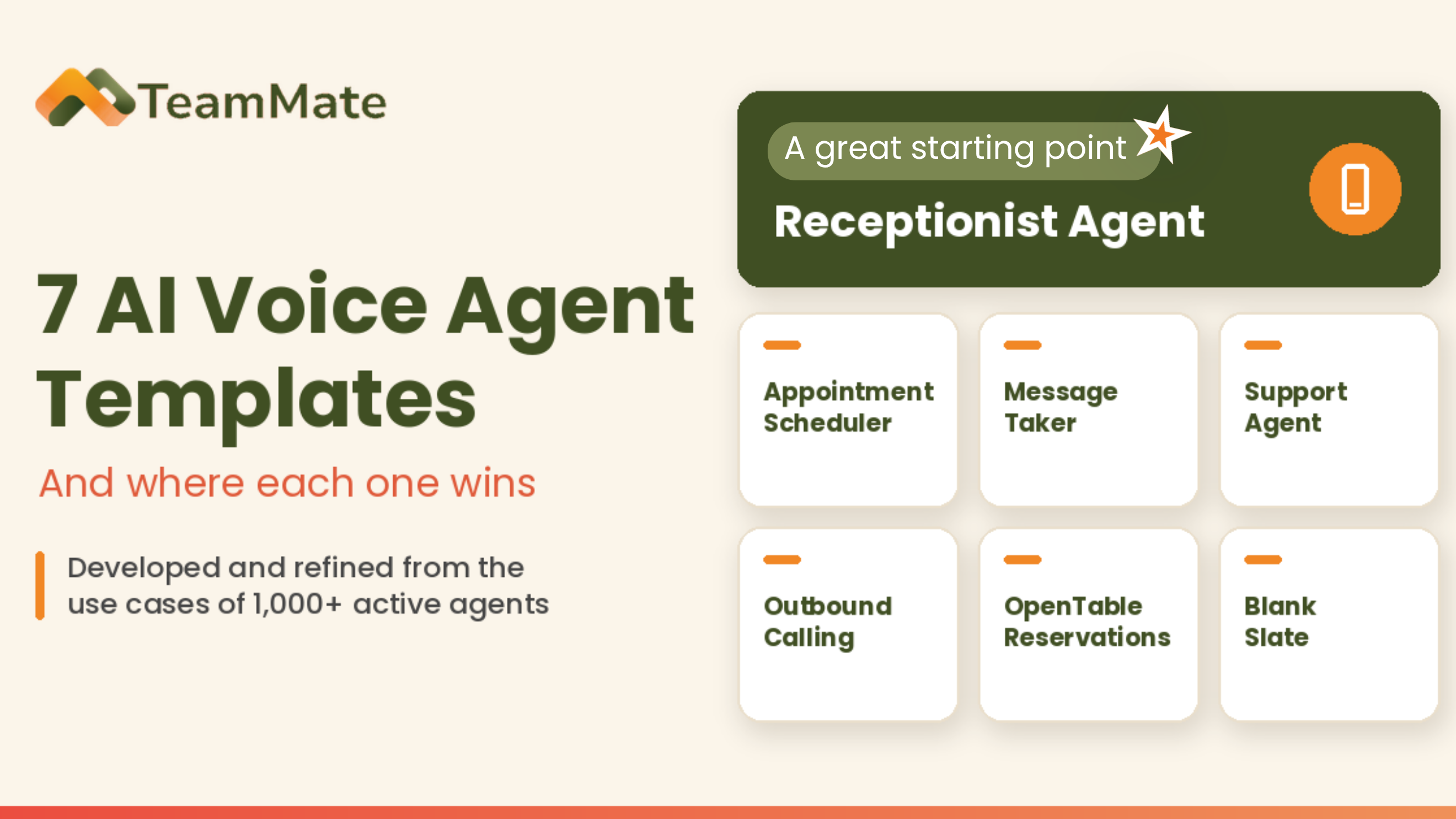
- Your margin. Every agent starts from a template, so you can sell a ready-made agent without a custom build. See 7 AI Voice Agent Templates and Where Each One Wins.
- Your platform, not only Teams. It answers for customers on your own phone system, has a NetSapiens version and works alongside PBX Connector, which connects 80+ PBX types to Teams and keeps numbers on your platform. With the ACS Call App add-on, users don't need a Teams Phone license.
- Your support model. It mirrors Microsoft's own "contact your partner first" boundary: you support your customers and can escalate to TeamMate.
It also brings 40+ languages and sub-100ms response. Whatever you choose, run other vendors through the same checklist.
Is Microsoft a threat to service providers?
For the customer relationship, yes. Microsoft sets the integration rules and support boundaries, and now ships an AI agent inside Teams Phone that your customer can buy without you.
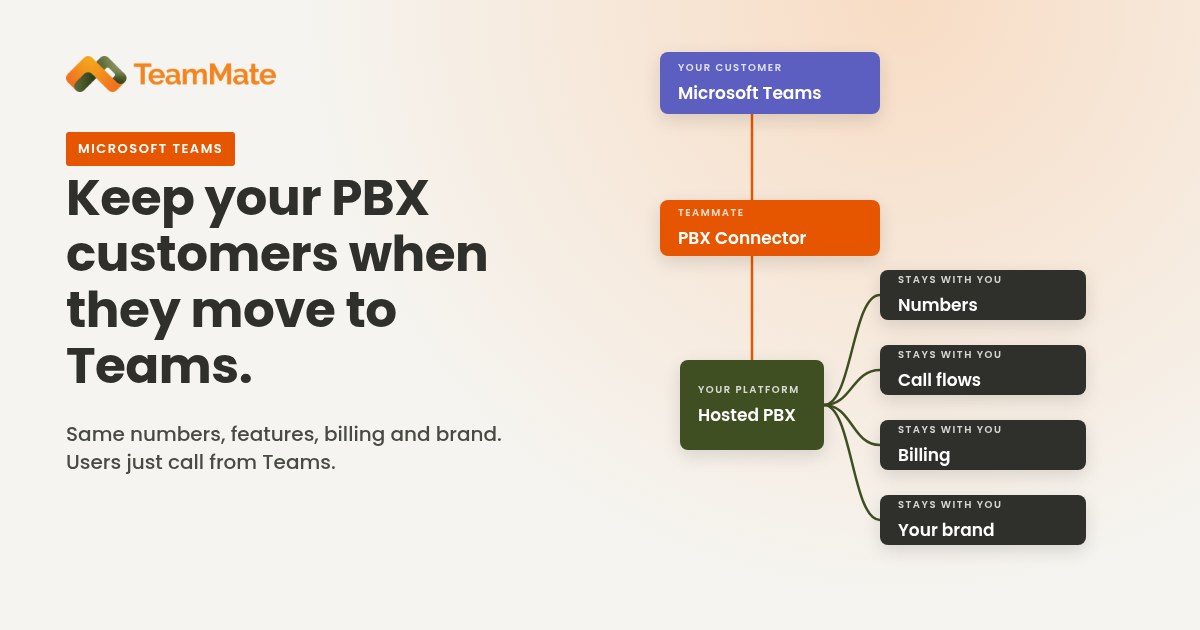
But Microsoft doesn't sell your customer relationship, numbers, billing, brand or support. That layer stays with the provider, as long as the provider leads the AI conversation before Microsoft's admin center does. More in How to Keep Your PBX Customers When They Move to Teams Phone and CallTower Bought Momentum's Voice Business.
Frequently asked questions
What should a service provider look for in a Teams voice agent?
Check six things: whether you can resell it under your own brand, how it reaches Teams Phone and what Microsoft certifies on that path, which licenses it needs, who supports the customer, whether it works beyond Teams, and whether it's generally available and running in production.
Does Microsoft have a voice agent that's ready out of the box?
Yes. Teams Phone Agent became generally available on September 30, 2026. It extends Teams auto attendants with AI conversations that screen calls, answer questions, manage appointments and route callers. It needs at least one Teams Phone license, a free resource account license for each resource account, and Copilot credits, and the customer sets it up in its own Teams admin center.
Can a service provider white-label or resell Microsoft's Teams Phone Agent?
Microsoft's Teams Phone Agent documentation describes no white-label or resale version. The customer's Teams administrator creates and runs it in its own tenant, so it competes with the provider for the customer relationship. At most, a provider supplies the phone numbers, through Operator Connect or Direct Routing, or the Teams Phone licenses.
Is AudioCodes the only voice agent option for Teams?
No. As of October 16, 2026, AudioCodes is the only provider on Microsoft's certified list for voice agents integrated through the Unify model. Microsoft's planning guidance covers voice agents built in-house or delivered by a partner, and other vendors offer AI agents for Teams too.
How does TeamMate measure up?
TeamMate AI Voice Agents is white-label, so service providers sell it under their own brand. It reaches Teams over Direct Routing through Microsoft-certified SBCs and needs a Phone System (Teams Phone) license on the Teams side. It also answers for customers on the provider's own phone system, and the partner supports its customers and can escalate to TeamMate. It's generally available, with more than 1,000 agents running. Microsoft doesn't certify TeamMate or its voice agents.
Sell AI voice agents under your own brand
Microsoft has an agent your customers can buy without you, and its certified list shows one way to integrate. If you want an AI voice agent your customers buy from you, under your name and on your platform, see how TeamMate AI Voice Agents works. Operator Connect Express and white-label Teams Call Recording round out the Teams services you can sell.